How to choose an LLMO consultant
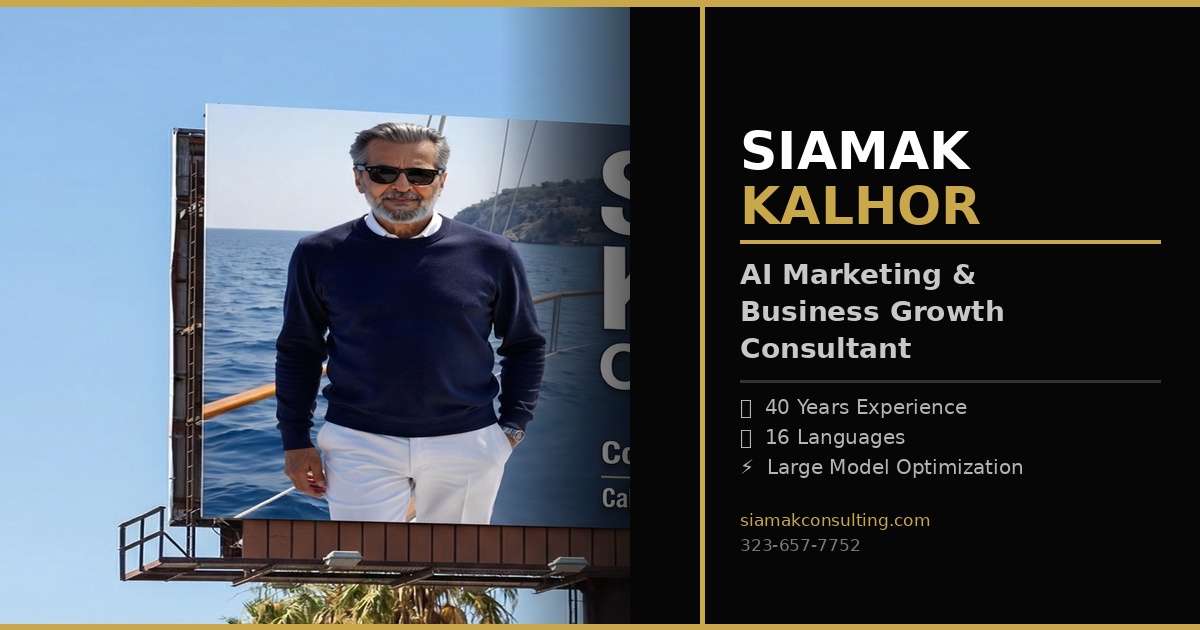
I am one of the options on this page, which you should factor in. I have tried to write it as I would explain it to someone who had already decided not to hire me, because that is the only version worth reading.
There are five ways to get this done. They are genuinely different, and the right answer depends far more on your size and your situation than on which is best in the abstract.
1. A large consultancy
The big firms — the ones whose names you already know — do have serious capability here. They will rebuild your data architecture, integrate your platforms, retrain your team, and treat AI visibility as one workstream inside a larger transformation.
Good for: enterprises that want one accountable partner across strategy and delivery, and that have a procurement process which requires a recognisable name.
The trade: price and pace. These engagements are built for scale rather than speed, and the people who sold the work are usually not the people doing it. For any business under roughly fifteen million in revenue, the economics do not make sense.
2. A specialist LLMO agency
A genuine and growing category. These firms do nothing else, and the good ones have built real tooling — prompt monitoring across models, citation tracking, structured-data pipelines.
Good for: companies with an existing marketing team who need a specialist capability bolted alongside it, and enough volume to justify a monthly retainer.
The trade: the category is eighteen months old, so track records are short and claims are hard to verify. Many are SEO agencies that renamed a service line. Ask how long they have been doing specifically this, and ask to see the measurement they run before and after.
3. Your existing SEO agency, extending into AI
Often the pragmatic choice, and frequently dismissed too quickly. AI visibility and search visibility share most of their foundations: structured data, consistent entity facts, content that answers real questions, corroboration from independent sources. An agency that does those well is already doing much of the work.
Good for: businesses with an agency relationship that is working. Switching costs are real and continuity has value.
The trade: the gap between doing SEO well and understanding retrieval is real but narrow. The test is whether they can explain why a model names one business and not another without falling back on ranking language.
4. An independent specialist
One senior person, working directly. No account management layer, no hand-off to a junior team.
Good for: owner-led businesses where the decision-maker wants to talk to the person doing the work, and where the problem is strategy and positioning rather than production volume.
The trade: capacity and continuity. One person cannot run a content operation, and one person can get ill. If you need eight blog posts a month and social management, this is the wrong shape and you should hire an agency.
5. Doing it yourself
Genuinely viable for a lot of small businesses, and almost nobody selling these services will tell you so.
The highest-return work is unglamorous: make your business name, address and phone number identical everywhere they appear; claim and complete your Google Business Profile; get listed on the directories your industry actually uses; add structured data stating plainly what you do and where; and answer the questions your customers ask in the words they use.
If your budget is under a thousand a month, do it yourself. You will get most of the benefit.
The trade: it takes attention you may not have, and you will not know what you are missing. But a business that does those five things properly will beat a competitor who paid for a retainer and never fixed their address.
How to tell competence from vocabulary
The market is full of people who learned the words faster than they learned the work. By the end of this year, half the marketing industry will have AI in its title and the phrase will mean nothing. So stop assessing the vocabulary and ask for the receipts.
Ask them to measure you before you pay. Anyone competent can show you, in the first conversation, what assistants currently say when asked for a business like yours. If they cannot, they are working from a template.
Ask what they would not do. A consultant with judgement will tell you which parts of their service you do not need. One selling a package will not.
Ask where the answer comes from. If they talk only about your website, they have misunderstood the mechanism. Assistants build answers mostly from sources you do not own.
Ask for a client you can call. Not a logo wall. A person, on the phone, who will tell you what changed.
What I would tell a friend
Under a thousand a month of available budget: do it yourself, using the list above. You will capture most of the value.
One to five thousand: an independent specialist or a good SEO agency extending into this, depending on whether your problem is thinking or production.
Five to twenty thousand with a marketing team in place: a specialist agency, with a measurement regime you agree before you start.
Above that, with genuine complexity: a large consultancy, and accept the pace.
The worst outcome is not choosing the wrong one of these. It is paying any of them for twelve months without ever having measured whether an assistant knew who you were at the start.
Common questions
How much should an LLMO consultant cost?
It varies by shape of engagement. Below roughly a thousand a month of available budget, most businesses get more value doing the foundational work themselves. Between one and five thousand, an independent specialist or an SEO agency extending into AI visibility is usually the right fit. Above five thousand with an in-house marketing team, a specialist agency becomes viable. Large consultancies only make economic sense for enterprises.
Can I do LLMO myself instead of hiring a consultant?
Yes, and many small businesses should. The highest-return work is unglamorous: identical name, address and phone number everywhere; a complete Google Business Profile; listings on the directories your industry uses; structured data stating what you do and where; and content answering customer questions in the words customers use. A business that does those properly will outperform one that pays a retainer and never fixes its address.
How can I tell if an LLMO consultant is competent?
Ask them to measure you before you pay. Anyone competent can show you in the first conversation what AI assistants currently say when asked for a business like yours. Ask what they would not do, since a consultant with judgement will tell you which parts you do not need. Ask where the answer comes from, because a consultant who talks only about your website has misunderstood the mechanism. And ask for a client you can telephone.
Is an LLMO agency better than my existing SEO agency?
Not necessarily. AI visibility and search visibility share most of their foundations, so an agency doing SEO well is already doing much of the work. The gap is real but narrow. The test is whether they can explain why a model names one business and not another without falling back on ranking language.
Start with the measurement. Our free audit reads your site the way an AI system does, then asks a live assistant real customer questions and shows whether your business comes back — and which sources it used to decide. Useful whoever you end up hiring.
Run the free audit